Inside Two Dialogue of Civilizations Programs
What is a DOC?
A Dialogue of Civilizations, often called a DOC, is a short-term global learning program offered by Northeastern University. Led by Northeastern faculty, Dialogues combine academic coursework with travel, allowing students to study a subject while experiencing the places, communities, and cultures connected to it. Instead of learning only through lectures and readings, students also take part in site visits, discussions with local experts, cultural activities, and hands-on experiences. Each Dialogue is different, but all are designed to help students connect classroom concepts to the real world while earning academic credit abroad.
Max and Nolan’s Unique Dialogues
In this blog, we’ll hear from two HAs, Max and Nolan, who recently completed two distinct Dialogues in different places.
Max traveled to Sardinia, Italy, for an engineering-focused program centered on sustainability, resource use, and solid waste management. As a fourth-year Civil Engineering major, this program was a perfect fit. Through visits to waste-management facilities and conversations with industry leaders, he explored how engineering can reduce pollution and transform waste into energy and other resources.
Nolan traveled through Türkiye, Bosnia and Herzegovina, and Serbia to study international politics, conflict, migration, and the lasting effects of war in the Balkans. During his Dialogue, he was able to further pursue his interests related to his Political Science and International Affairs major. Through lectures, site visits, and conversations with local experts, he examined how history, memory, political institutions, and international involvement continue to shape the region today.
A Typical Day on Dialogue Looked Like…
Max: My days on Dialogue started off with walking to class at the University of Cagliari, where our Northeastern professor, Annalisa Onnis-Hayden, taught us during our morning lectures. Afternoons were split between guest lectures from the Sardinian region or free time, which usually meant a trip to the beach or exploring the shops and streets of Cagliari with friends. I loved spending my evenings with an aperitivo, a family-style dinner, and gelato of course. Our weekends were reserved for full-day excursions, usually taking a bus or even Land Rover to other parts of the island. Even when we didn’t have a planned activity, we still made the most of our time on the island together. Whether it was crossword puzzles, card games, or spontaneous walks with new friends, my days always felt full but never rushed!
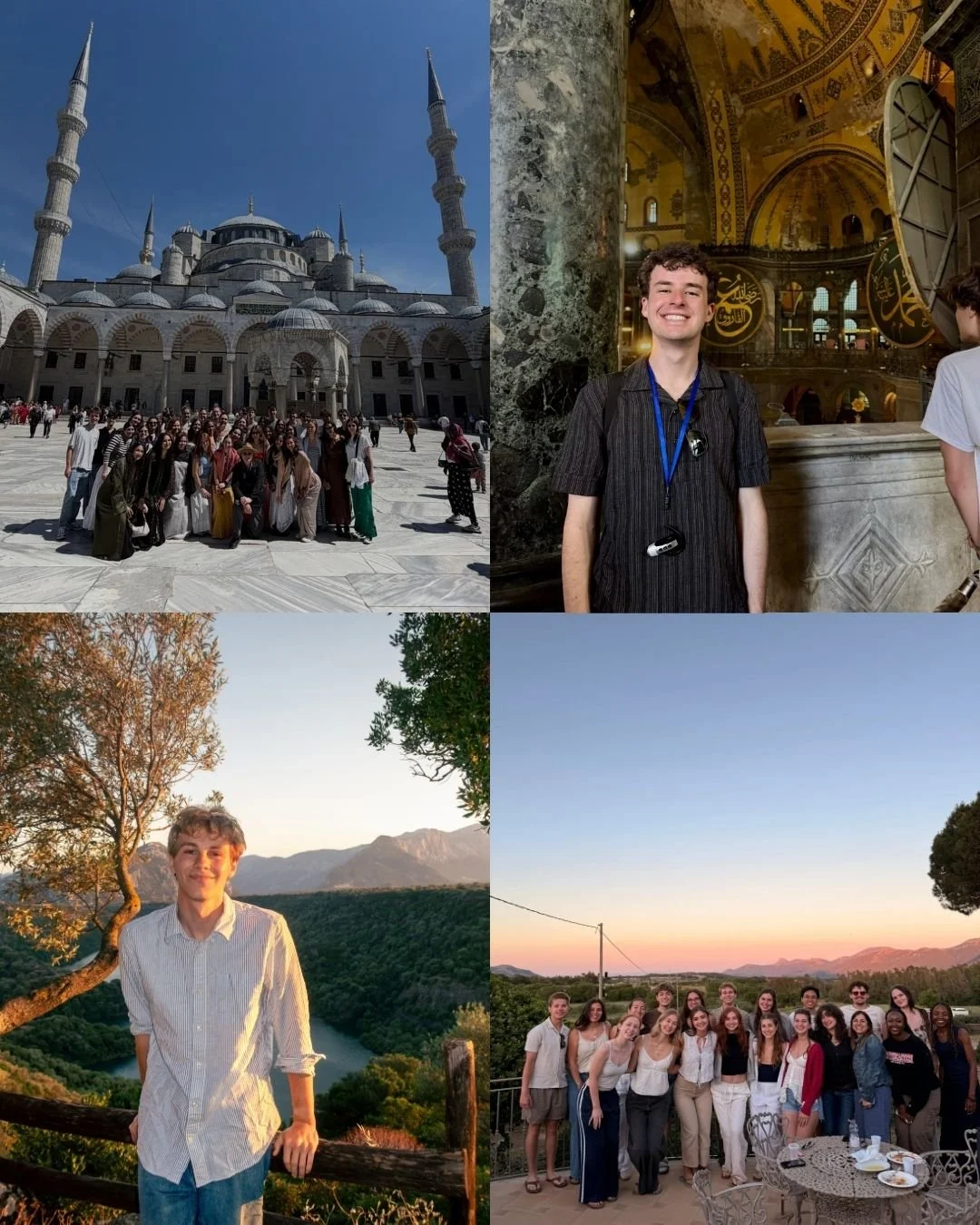
Nolan: A typical day on my Dialogue always had the perfect balance of academics, exploring, and having fun with the group. We usually started with breakfast at the hotel before heading into a morning lecture with our amazing professors, Denis Sullivan and Mladen Mrdalj. What made the experience so special was how intentionally they connected what we learned in class to the places we visited. One day in Istanbul, for example, we started with a lecture on Turkish history and then went to the Hagia Sophia, where we could actually see the layers of history we had just discussed. We were also encouraged to explore the city on our own, so lunch often meant heading out in small groups to find a local spot and try something new. In the afternoons, we might hear from a guest speaker, work on assignments, or head to another site visit, but there was always time built in to enjoy the city too. One of my favorite nights was a private cruise on the Bosphorus Strait, where we got to take in the views of Istanbul, relax, and spend time together after a full day. Even when the schedule was packed, the days never felt like we were just moving from one class to the next. Everything felt connected, and there was always something new to learn, see, or experience.
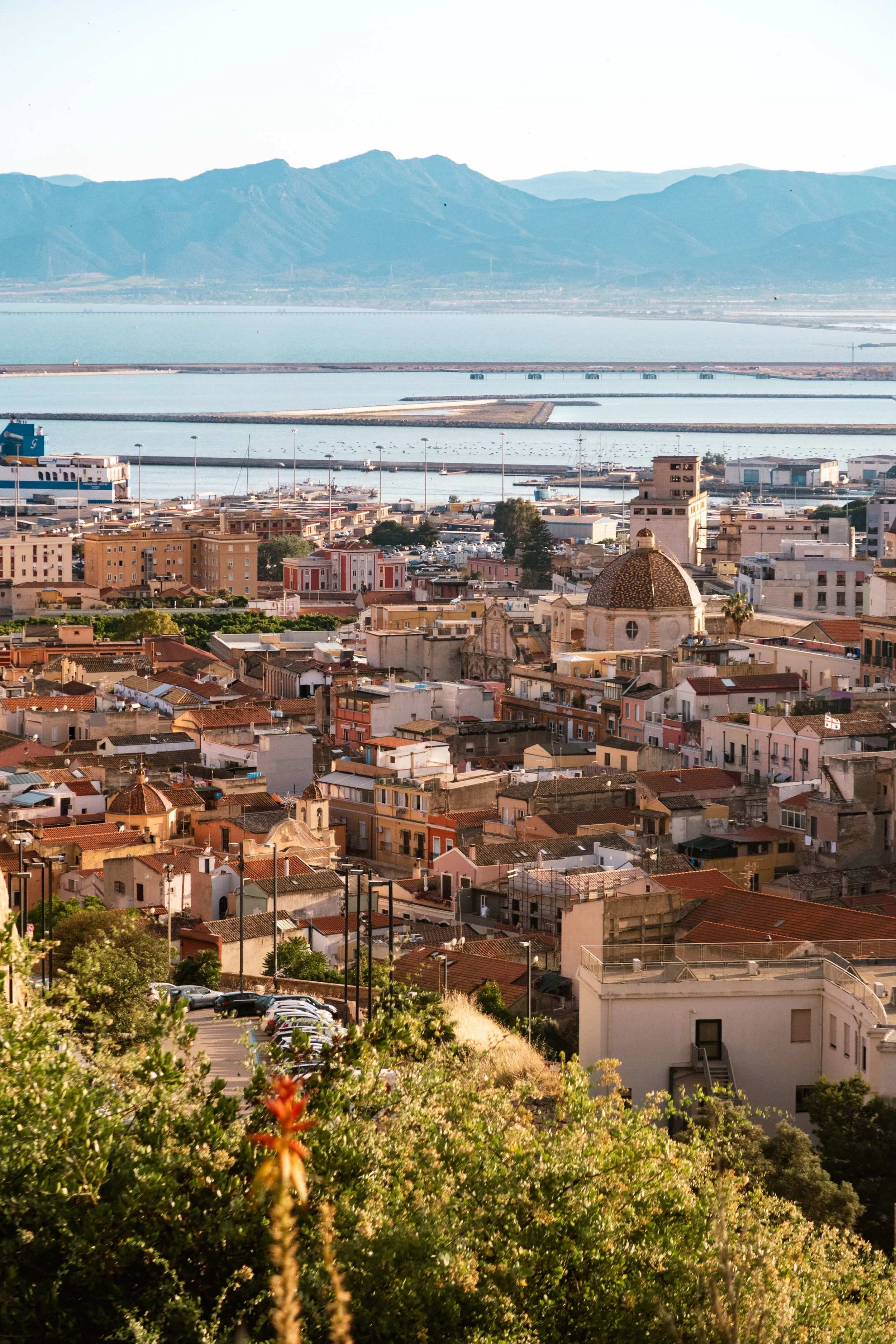
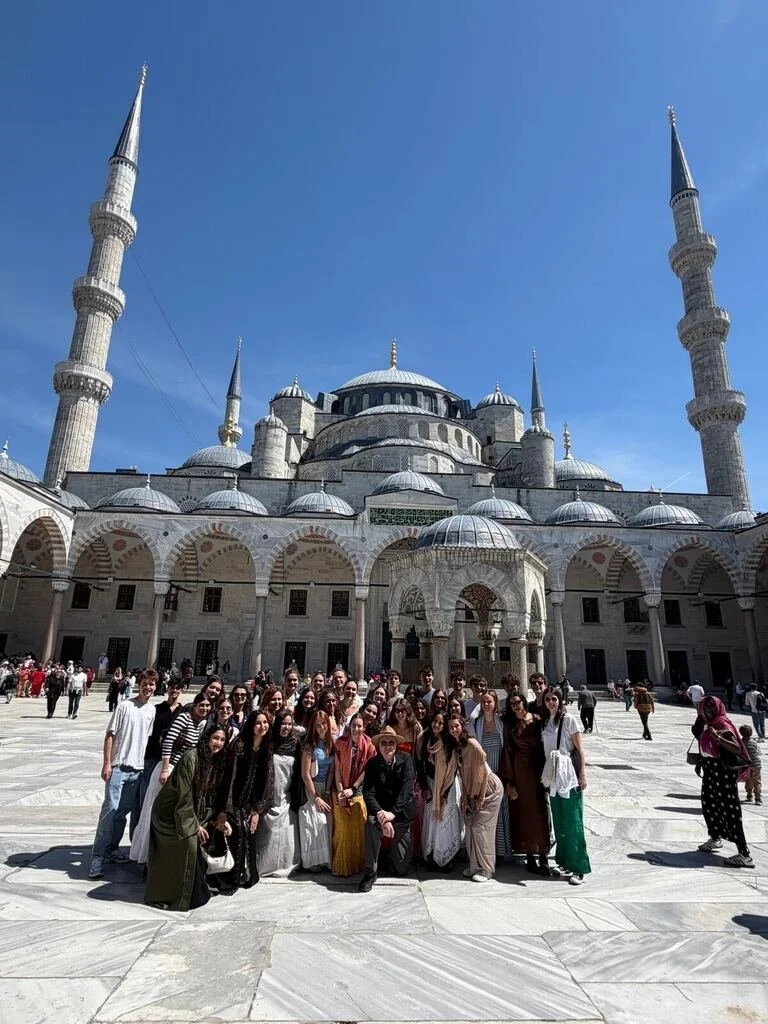
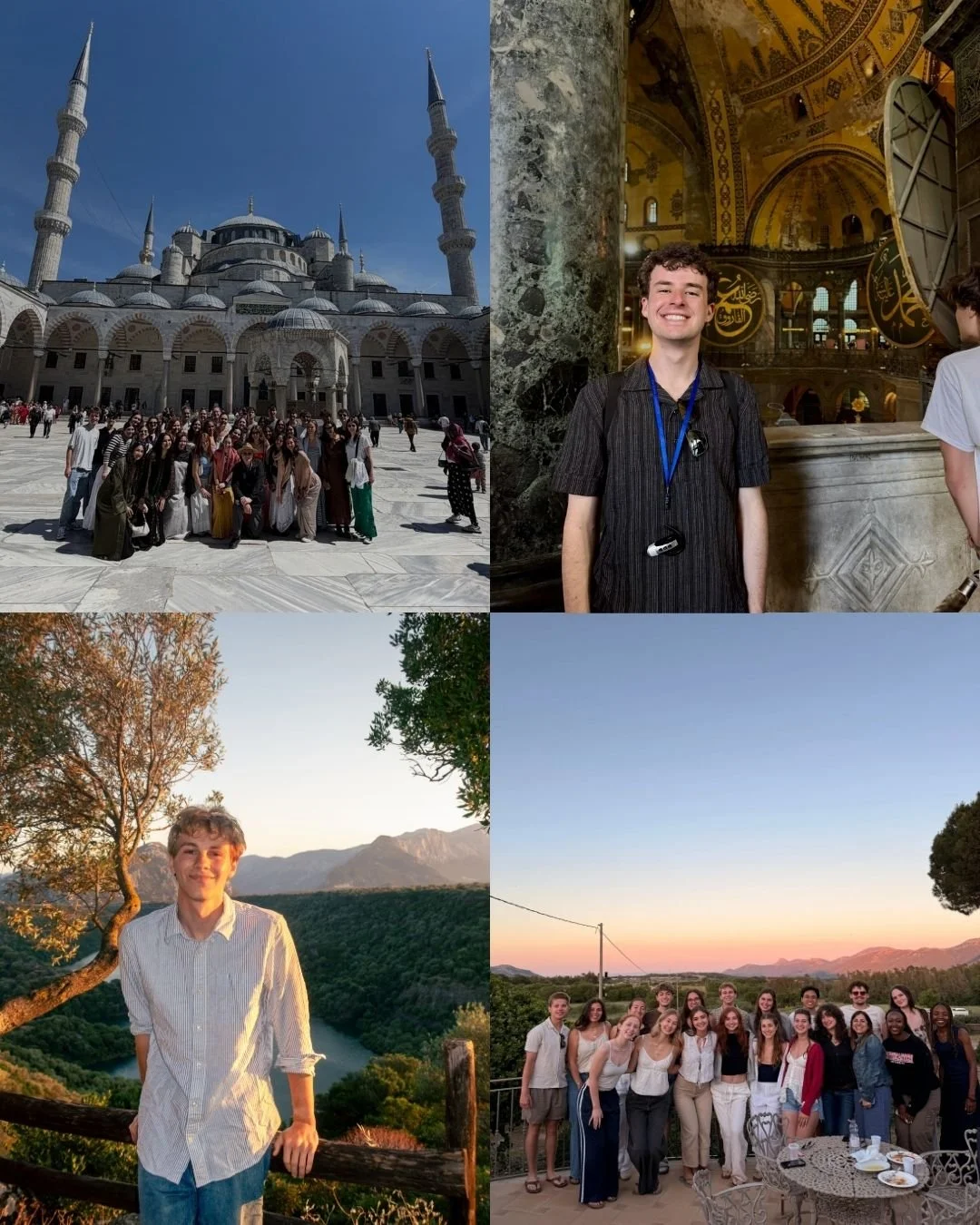
Overlooking Cagliari, referred to as the city of the sun! | Our dialogue group standing outside the Blue Mosque in Istanbul
In the Classroom, We…
Max: Time in the classroom blended traditional lectures with guest speakers who were directly tied to the region. Angela Serpe taught us about urban mining and e-waste, while Salvatore Pinna explained Sardinia’s updated waste management plan, and Andrea Cossu talked about the development of Cagliari’s door-to-door recycling system. We also worked on three distinct group projects over the course of the DOC, including an opportunity to design a waste management system for the city of Boston using the lessons and ideas we learned from the European Union. Hearing directly from the people who designed these systems made the material I was learning feel so much more tangible than if I were to read it out of a textbook. My experiences in the classroom in Cagliari allowed me to learn about policy, engineering, and sustainability and how they intersected in a functioning city.
Nolan: The most exciting part of our Dialogue was that, for the most part, we did not actually have a classroom. We occasionally gathered in hotel conference rooms for lectures, but Sullivan believed that on a humanities-focused Dialogue, some of the most meaningful learning happens by stepping outside, speaking with people, and experiencing the places being discussed firsthand. Fun fact: Sullivan helped create Northeastern’s very first Dialogue of Civilizations and has continued leading them ever since, so he truly understood how to make each city feel like an extension of the course. That approach made the entire experience feel immersive, spontaneous, and much more personal than a traditional class.
Our first day in Belgrade captured this perfectly. Mladen, one of our professors, is from Serbia and led us on a walking tour that blended the city’s history with his own experiences and the political tensions unfolding around us. Serbia was in the midst of a massive student-led protest movement that began after the November 2024 collapse of a recently renovated railway-station canopy in Novi Sad. The tragedy quickly became a symbol of broader anger over government corruption, negligence, and a lack of accountability. As we walked through Belgrade, we saw protest messages covering walls and public spaces, while Mladen explained the slogans, symbols, and competing messages being used to discredit the movement. Hearing that context from someone who grew up in Serbia, while seeing the evidence literally on the walls around us, made the situation feel immediate, complex, and real. It gave us an understanding we could never have fully gained in a classroom.
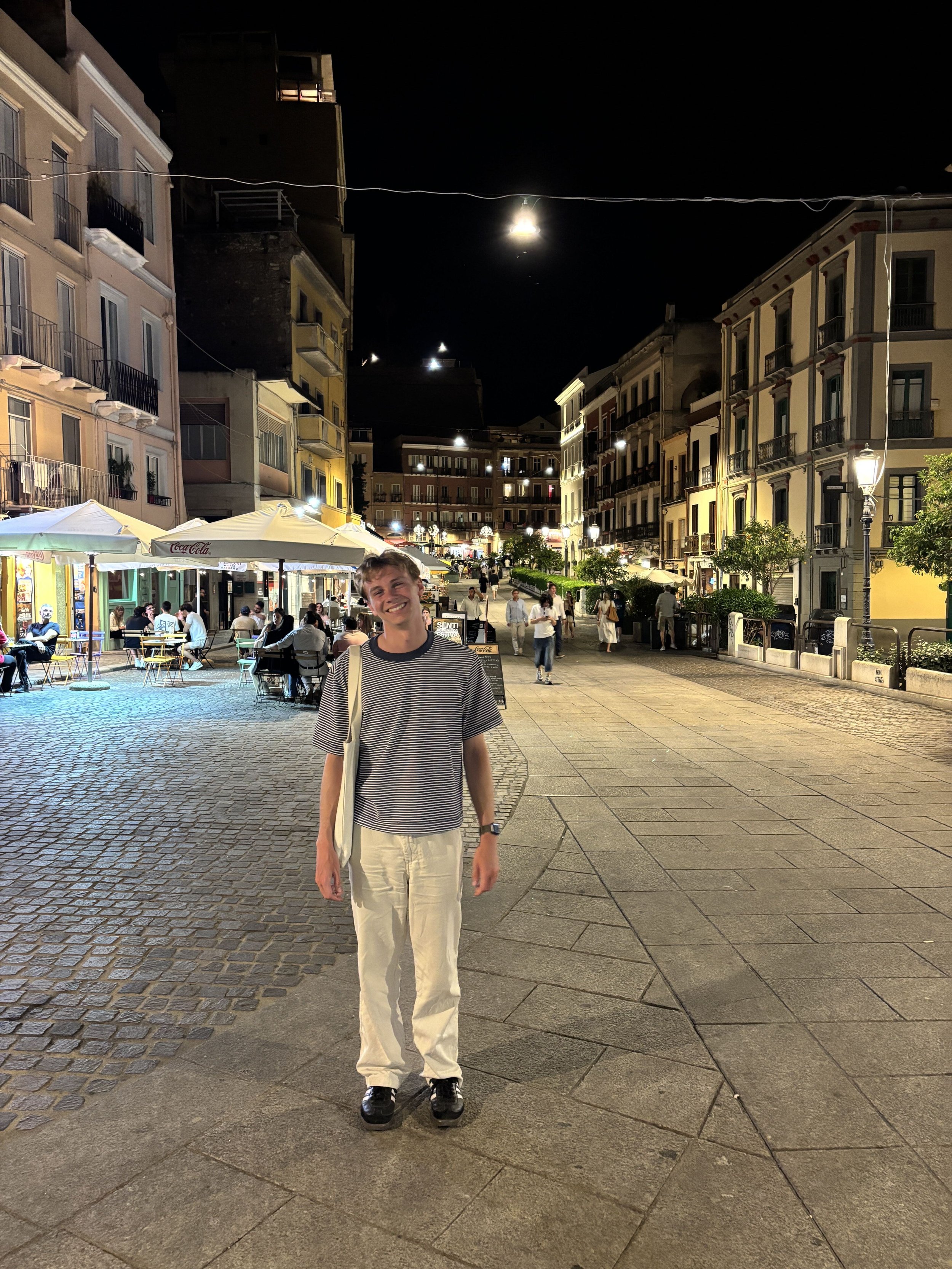
Max out on the main street, Corso Vittorio Emanuele II
Our Site Visits Took Us…
Max: Site visits took our DOC group to several locations across Sardinia, including a paper mill, an anaerobic digestion plant, a waste-to-energy facility, and an out-of-operation landfill being monitored for leachate. From watching paper get pulped, pressed, and rolled in real time, to actually stepping inside of a newly constructed anaerobic digester, I was able to connect the theories and ideas I was learning in the classroom to how waste management worked in real life. Beyond waste infrastructure, weekend excursions brought us into historic mining tunnels at Montevecchio and Sulcis, the Museum of Singing Rocks in San Sperate, and the most beautiful beach in the world at Cala Goloritzé. These cultural excursions tied the environmental curriculum we were learning to centuries of Sardinian history, allowing us a much deeper look into resource recovery that transcended beyond the classroom.
Nolan: The most impactful site visit of my Dialogue was our trip to Srebrenica, where we visited both the memorial center and the former Dutchbat base. Before the visit, I understood the genocide mainly through readings, lectures, and films. Being there was entirely different. Walking through the memorial and seeing the rows of white headstones made the scale of the loss feel overwhelming in a way that numbers never could. At the Dutchbat base, we learned more about the thousands of Bosniak civilians who sought protection from UN peacekeepers and the devastating failure of the international community to keep them safe. Standing in the spaces where people had once waited for help forced me to think beyond the politics of intervention and confront the human consequences of those decisions. It was a heavy and emotional day, but also the most important one of the trip. I left with a deeper understanding of how easily phrases like “international failure” can distance us from the people who actually experienced it, and why preserving places like Srebrenica is so essential to ensuring that their stories are not forgotten. The experience was incredibly profound, and I feel both fortunate and privileged to have had the opportunity to learn from the site firsthand.
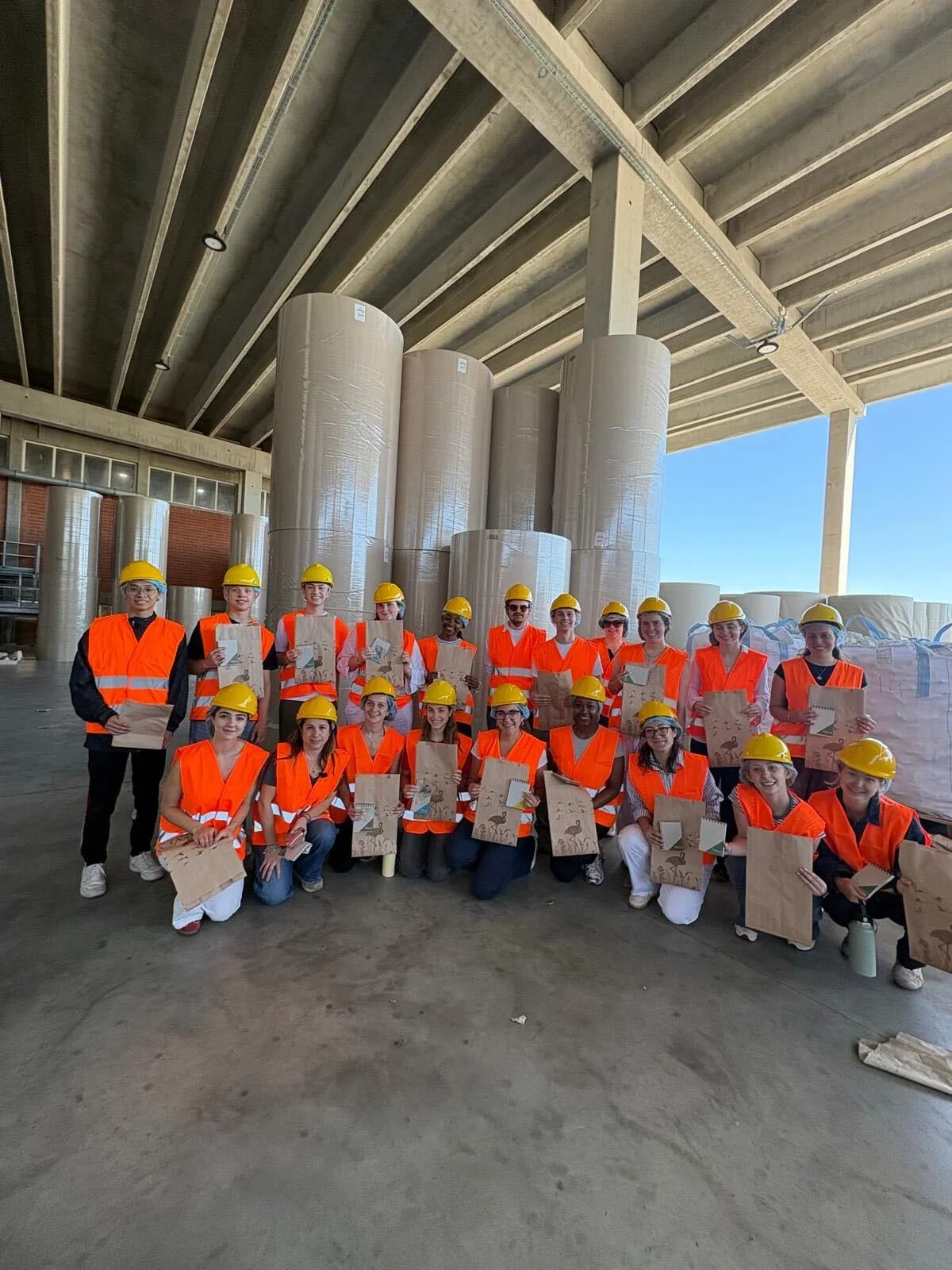
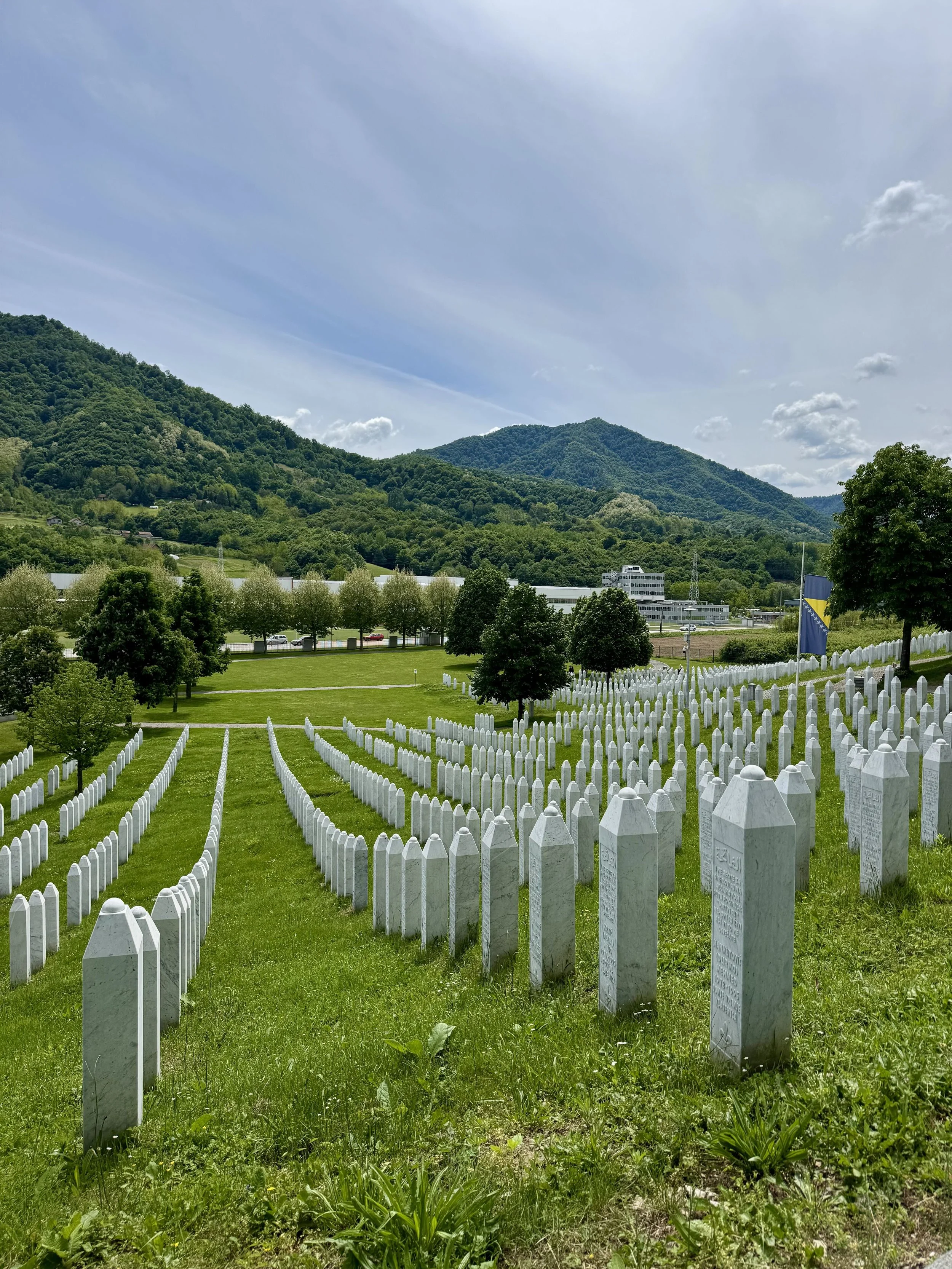
Site visit to a paper recycling plant | A view from the Srebrenica memorial; the building in the background of the picture is the old UN base
The Best Conversations Happened…
Max: I will always think back to the conversations I had with the people living the subject matter of our DOC firsthand, such as the plant managers explaining landfill remediation plans, or the guest speakers who had personally been involved in shaping Sardinia’s recycling policy, or even the mining tour guides who described the brutal historical labor conditions. I also had incredible informal conversations with other members of the community, such as walking tours with Professor Onnis-Hayden who pointed out her personal favorite landmarks from growing up in Cagliari herself, or with the waiter at the restaurant that we would always go to after class, or our professor’s friend, Paula, who acted as a tour guide when visiting the ancient megalithic structures of the Nuraghe. It was so inspiring to learn from the experiences of people with a different cultural background to mine, and their conversations left long-lasting impressions that I tend to think back on and hope to apply to my everyday life.
Nolan: Some of the best conversations on our Dialogue were the ones that happened when we were just out exploring. We had incredible opportunities to speak with diplomats at the US embassies in Bosnia and Serbia and hear from Serbia’s State Secretary at the Ministry of Foreign Affairs, but some of the moments I remember most came from talking with shop owners, students, protesters, and other young people we met in the city. For example, one Friday night in Belgrade, a few of us ended up spending nearly two hours talking with a group of Serbian students about their experiences taking part in the protests. We talked about corruption, elections, Serbian and American politics, and what it feels like to be young while so much around you feels uncertain. Before we left, they gave us pins written in Serbian Cyrillic that translate to “Students Win.” Mine still sits on my dresser in Boston. I love having such a small reminder of that night because it takes me back to one of the most meaningful parts of the Dialogue: realizing how much we could learn from one another, and how many of the same hopes, frustrations, and questions we shared despite growing up across the world from each other.
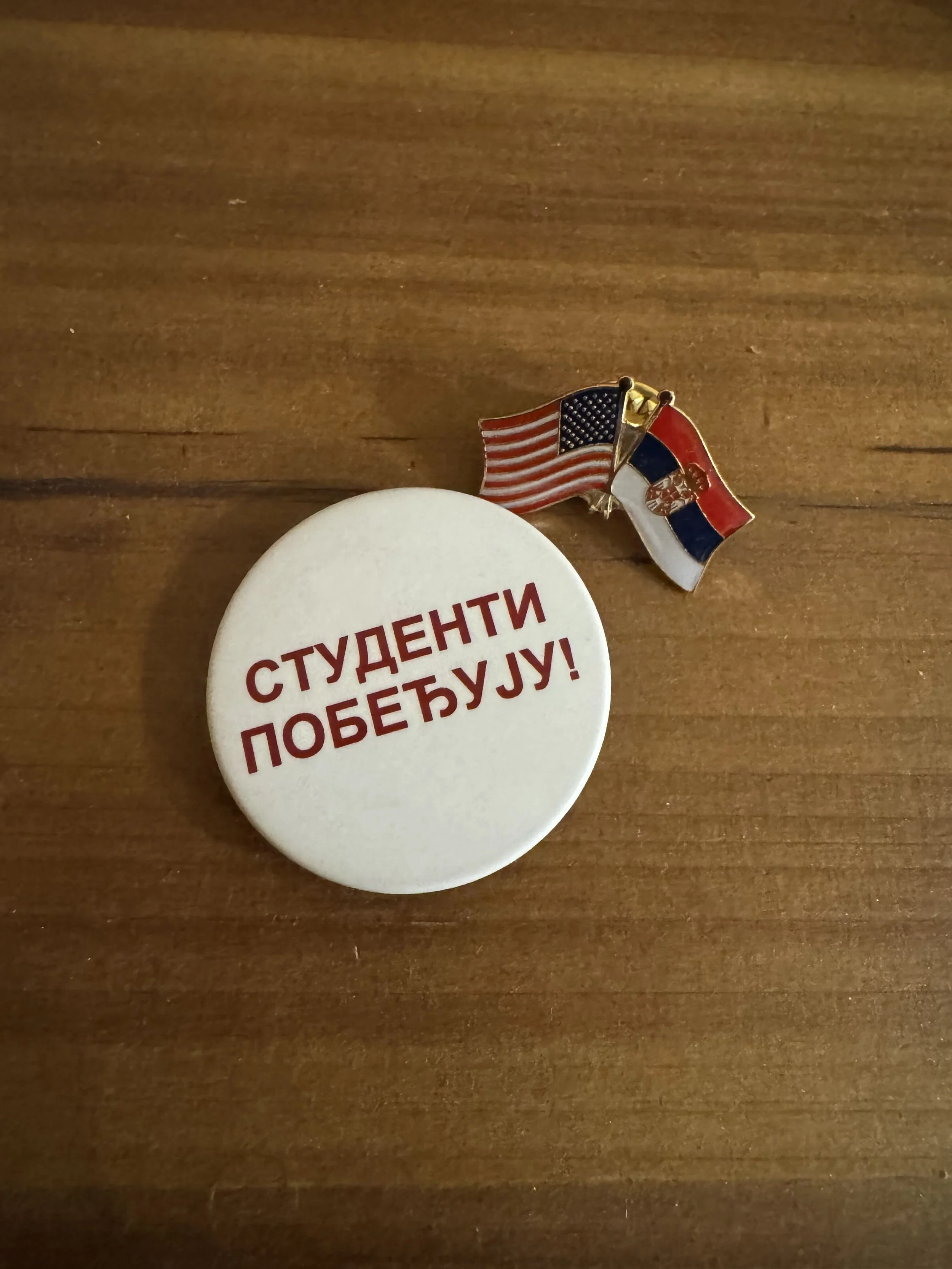
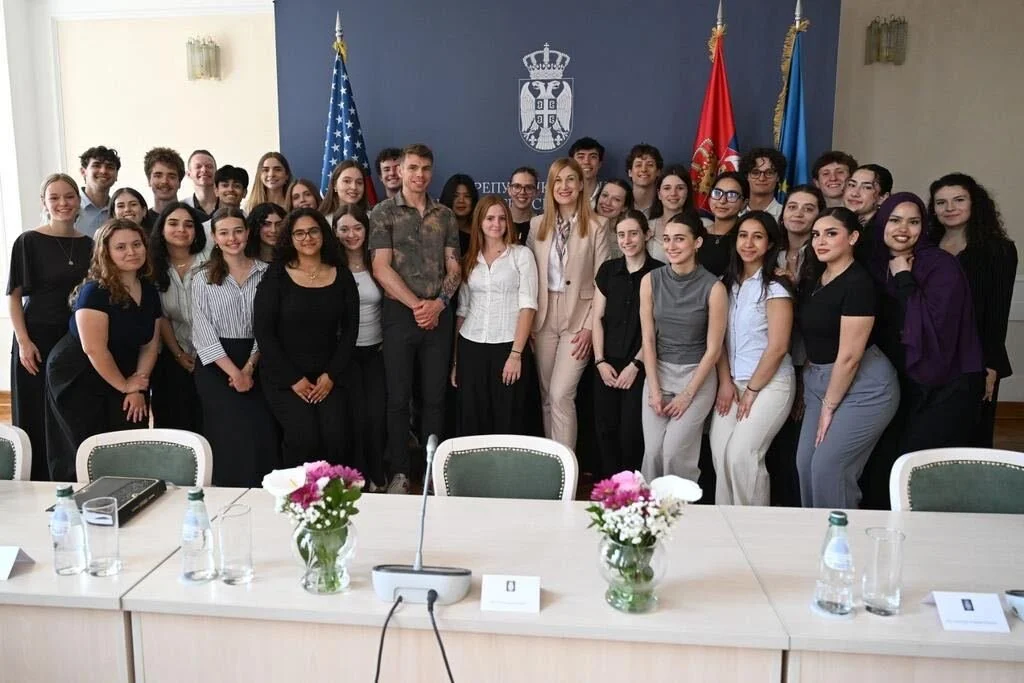
The pin that Serbian student protesters gave us, and a photo of our group with the State Secretary of the Serbian Ministry of Foreign Affairs
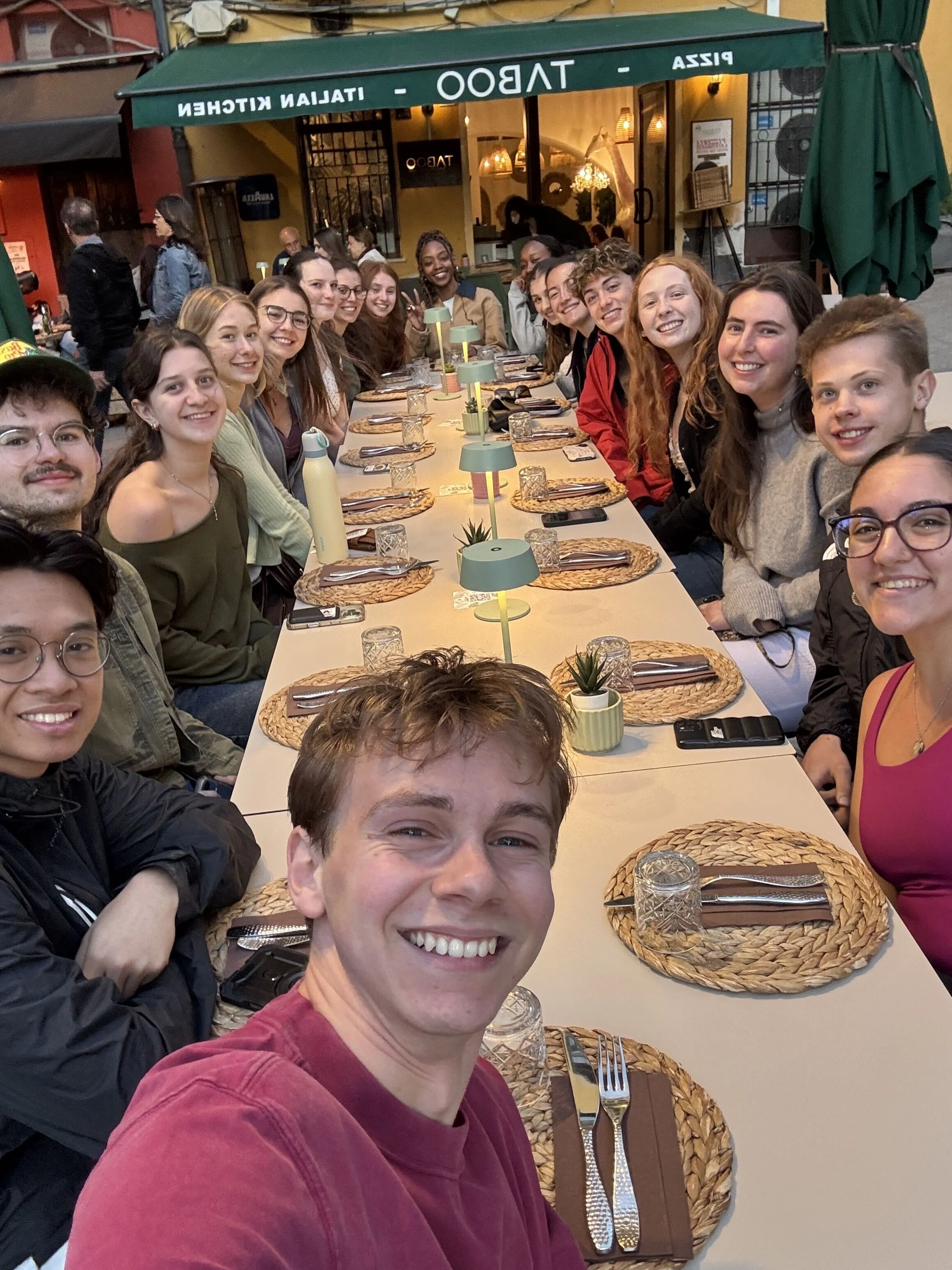
Everyone out at a restaurant in Piazza Yenne
Food and Housing Surprised Us…
Max: Housing on our DOC meant settling into Sardinian apartments and adjusting to Cagliari’s five-bin waste sorting system, the exact system we were learning about in class! Food was always a constant highlight on our DOC, and the highlights consisted of hours-long family-style dinners, a cooking class making fresh pasta and a traditional dessert called seadas, and a lunch in Bosa that somehow combined an entire meat and fish menu into one afternoon lunch. Grocery shopping was also a uniquely fun experience, where we got to experience authentic Italian grocery stores and markets to make our own meals. One night, we got together as an entire Dialogue group and had our own potluck dinner, and it was such a special night that I will never forget, as I was able to share new foods with new friends in a new city!
Nolan: Food became one of the easiest and most enjoyable ways to experience each place we visited. We tried to order local dishes whenever we could, including ćevapi, a grilled meat dish that quickly became one of my favorites in the Balkans. Our professors also organized group dinners throughout the trip, giving us the chance to try foods we may not have chosen on our own while sitting together and reflecting on everything we had experienced that day. Those meals became an important part of the Dialogue because they gave us time to slow down, laugh, and process the places we had visited outside of a lecture or assignment. Sullivan also made a special effort to take every student out to lunch in smaller groups during the trip, which gave us the chance to get to know him and one another on a more personal level. Our housing was also much nicer than I expected, and in every city, we stayed in comfortable hotels that made it easy to settle in after long days of lectures, travel, and site visits. A major shoutout goes to Nidal, who worked closely with Sullivan to plan the entire trip and made sure every detail, from our hotels to transportation and group meals, ran smoothly. By the end of the Dialogue, sharing meals and returning to the hotel together felt just as much a part of the experience as our lectures and site visits.
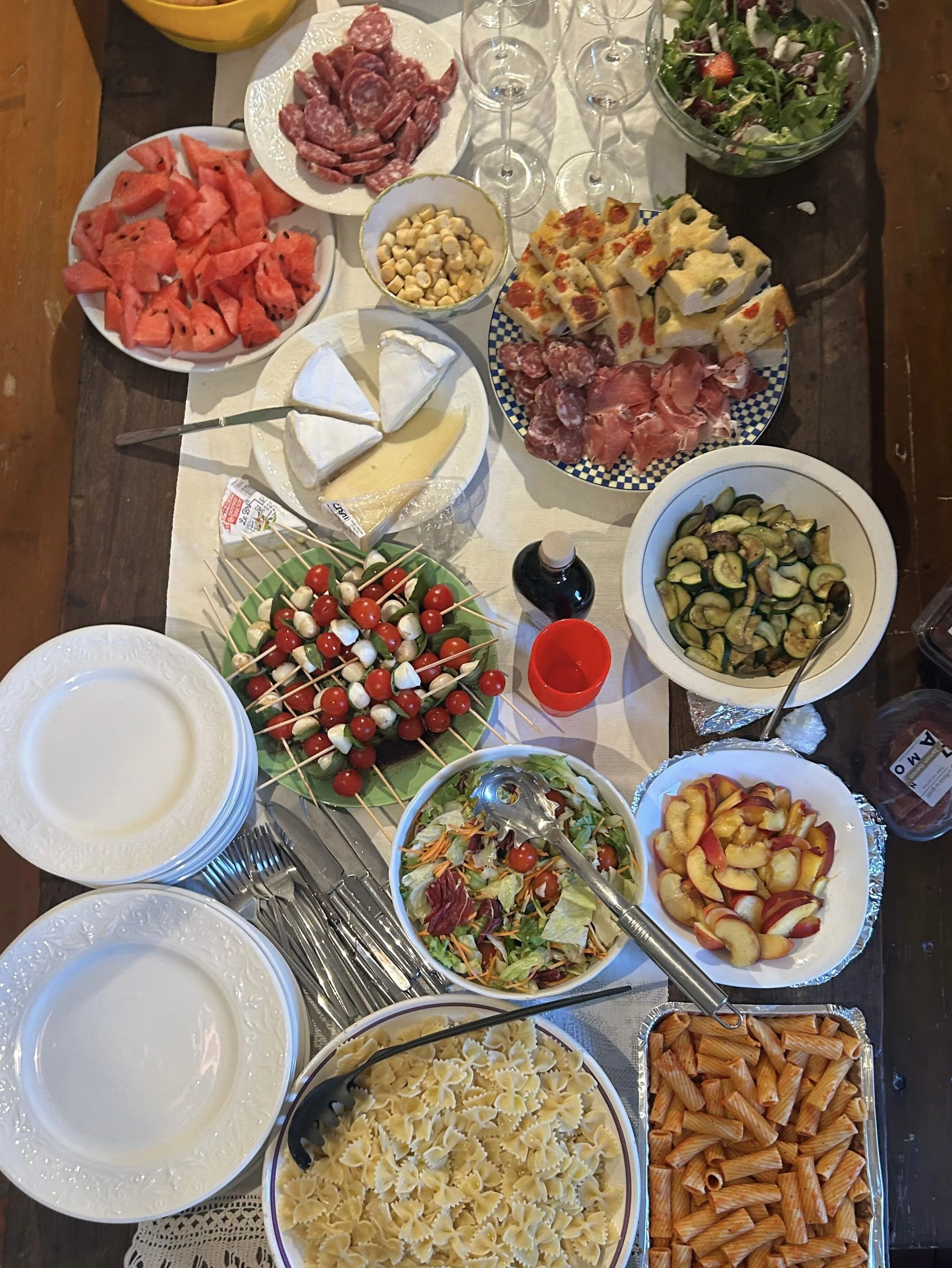
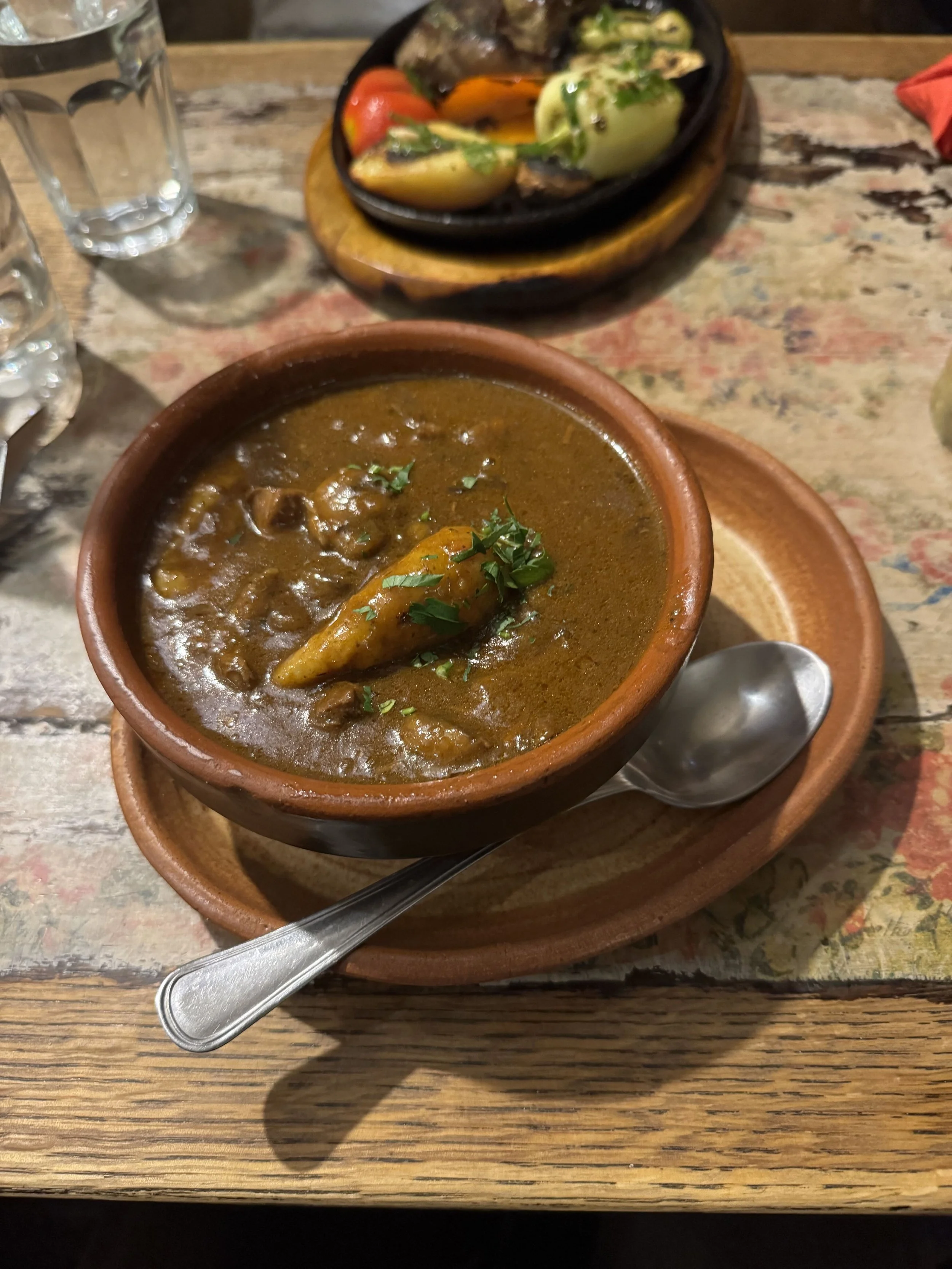
Potluck dinner in Cagliari! | One of the meals we had in Sarajevo, Bosnia
Looking Back, We Realized…
Max: Leaving Cagliari, I am not the same student who arrived just a month prior to writing this blog post. My understanding of waste management as a discipline has surely deepened, but more broadly I have learned how impactful experiential learning outside of the classroom can be. Sardinia has its own logic, history, timeline, and the people have such immense pride in their culture. Spending time immersing myself in this culture, whether through enjoying meals at the local restaurants or swimming in the teal blue Mediterranean waters, has allowed me to become a more curious and inquisitive engineer. I truly could not have wished for a greater experience, and the outcomes, lessons learned, and takeaways from this Dialogue are surely those I will carry with me long after I graduate from Northeastern.
Nolan: Looking back, I realized that the most meaningful part of my Dialogue was not any single lecture, city, or site visit, but the way all those experiences came together. As a Political Science and International Affairs major, I am used to reading about history, conflict, diplomacy, and the consequences of political decisions. I had learned about the siege of Sarajevo in previous classes, but walking through the city and seeing buildings still marked by bullet holes and other scars of the war opened my eyes in a completely different way. It made the subjects I study feel immediate, human, and real rather than distant events confined to a reading or lecture. Traveling through Türkiye and the Balkans allowed me to see the forces I study in the places they have shaped and understand them in a way I never had before. I also came away feeling more globally aware after spending time in a part of the world that is rarely discussed in depth in the US. Learning directly from our professors, local speakers, students, and the communities we visited broadened my perspective and reminded me that history and politics can look very different depending on who is telling the story. More than anything, the experience reminded me why I chose my major and why Northeastern’s commitment to global, experiential learning is so special. I feel incredibly lucky to have had this opportunity, and I know the conversations, friendships, and lessons from the trip will continue to shape how I understand the world long after the Dialogue itself.
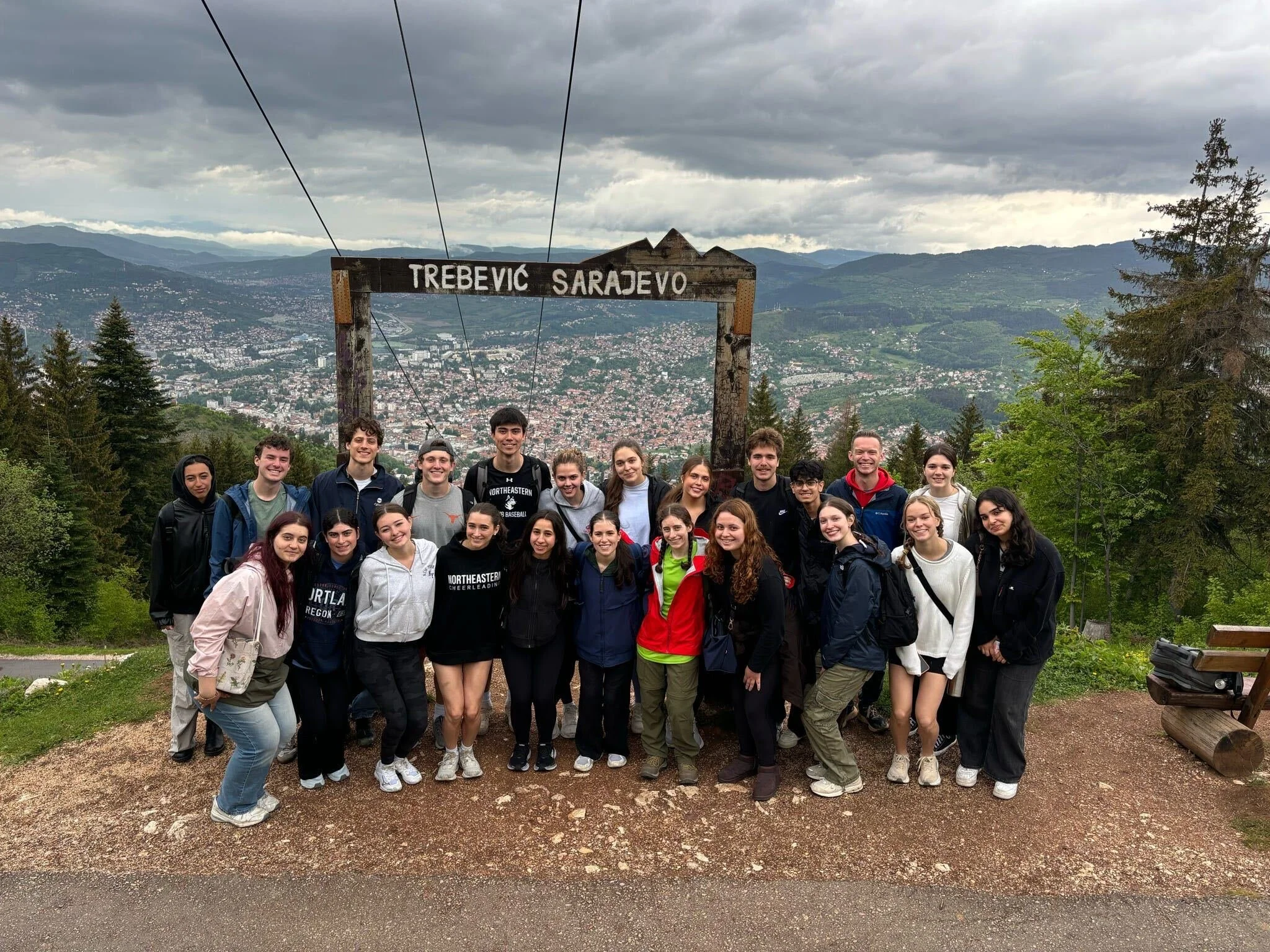
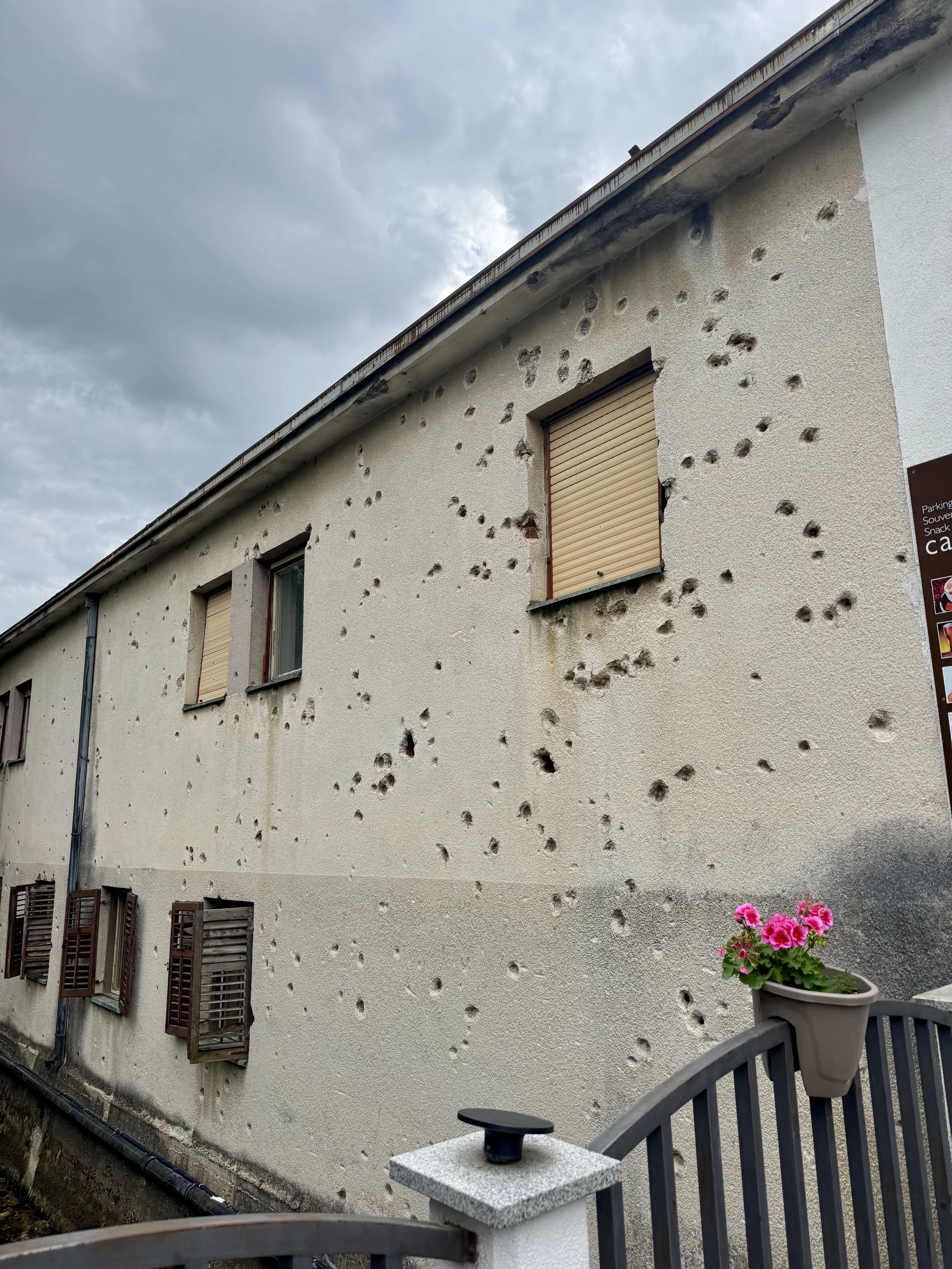
Our group on a hike up Mount Trebević in Bosnia, and a building with damage from the war
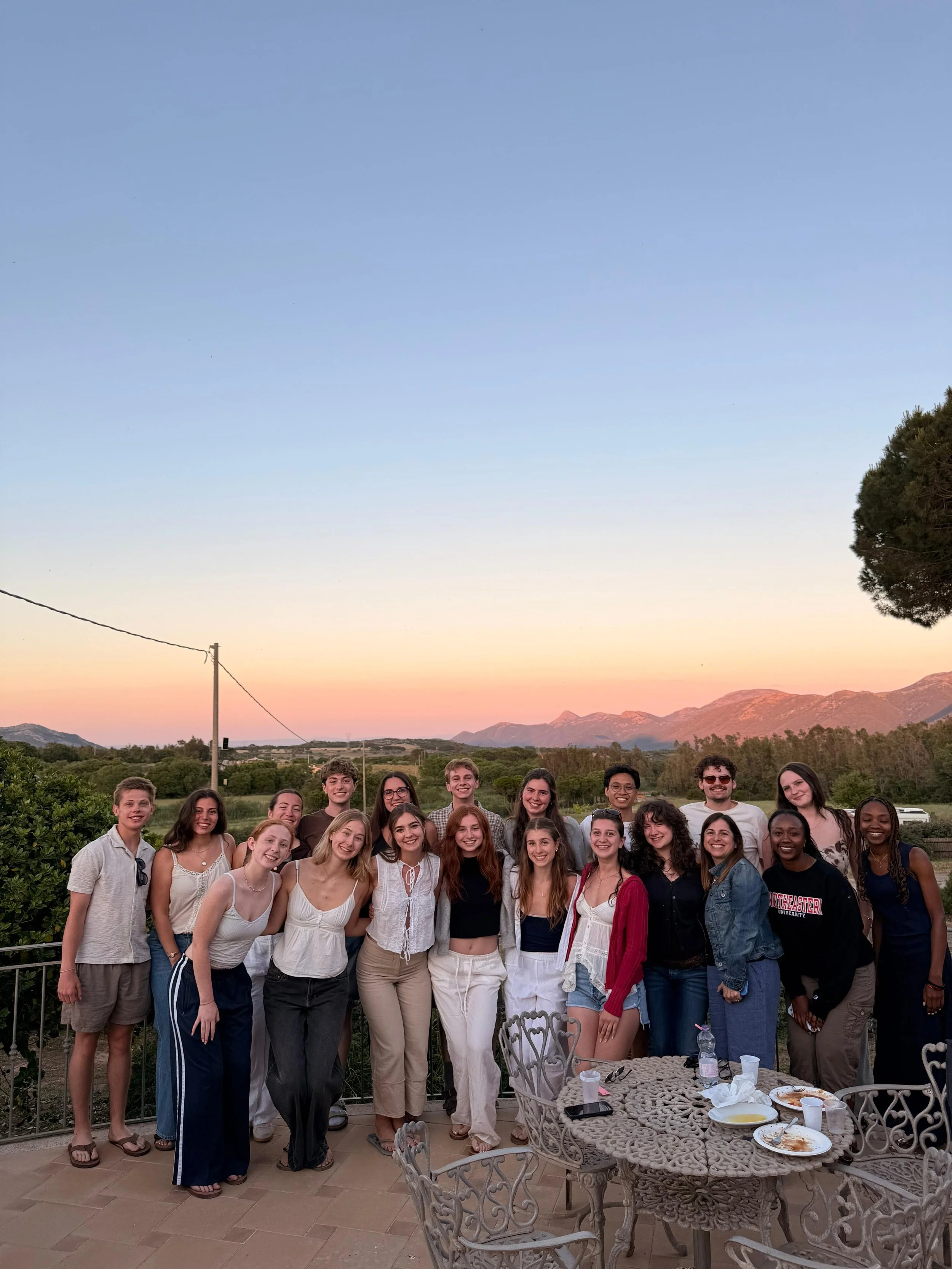
The whole crew at an agriturismo for the weekend- what a view!